Overview
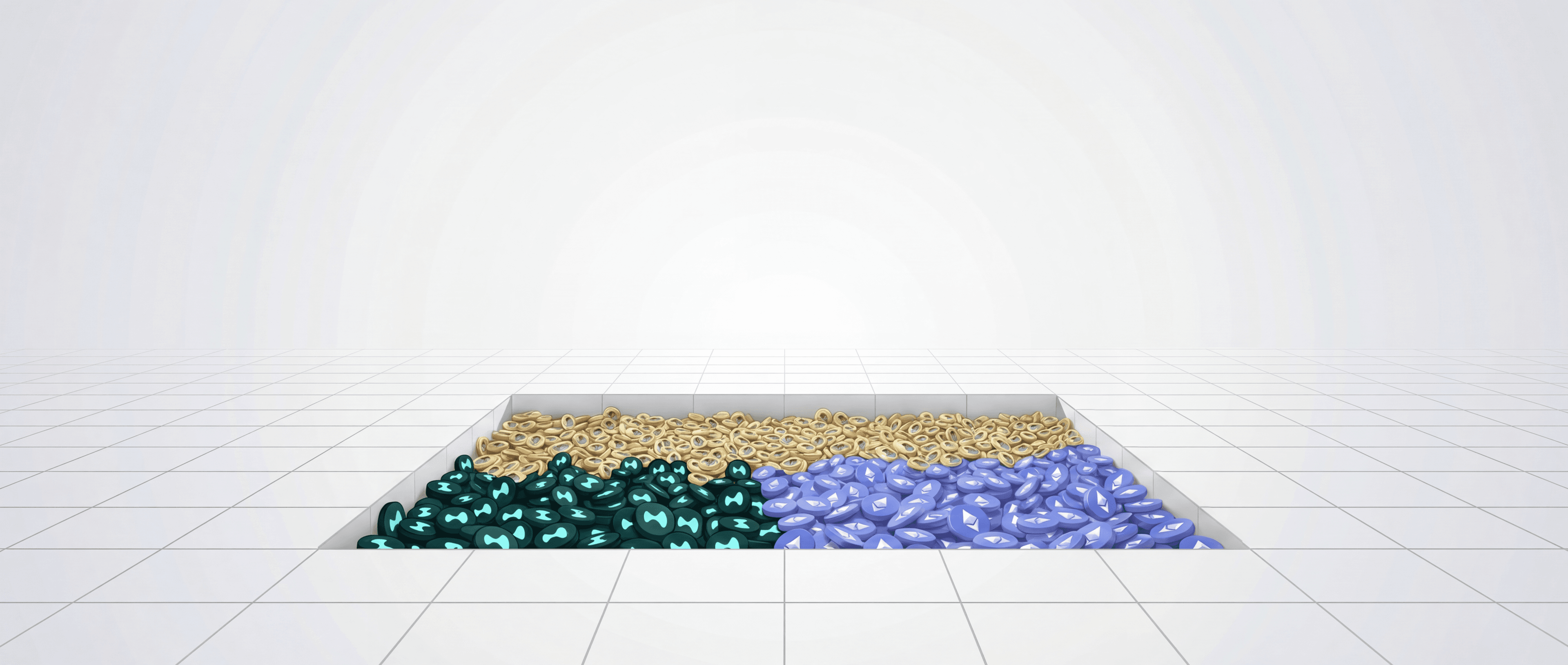
Wild Goat Coin’s market structure is built around three permanently locked, core liquidity pools designed to support long-term price discovery, accessibility, and supply discipline — without reliance on active treasury management, discretionary intervention, or third-party market makers.
The liquidity positions deployed at the creation of these pools are non-custodial, immutable, and cannot be withdrawn or rebalanced.
While the USD-denominated value of these pools changes over time due to fluctuations in ETH and HYPE, the underlying WGC/ETH and WGC/HYPE liquidity ranges themselves are permanent.
Core Liquidity Pools
WGC’s core liquidity is concentrated across three primary chains.
| Trading Pair | DEX Protocol | Chain | Status | Pool |
|---|---|---|---|---|
| WGC / flETH | Uniswap V4 / Flaunch | Base | Core LP positions burned | 0x09f…6176 |
| WGC / WHYPE | Hyperswap V3 | HyperEVM | Core LP positions burned | 0xc53…004f |
| WGC / WETH | Uniswap V3 | zkSync Era | Core LP positions burned | 0x75a…ac5a |
Together, these pools serve as WGC’s primary price discovery venues and form the foundation for downstream markets and cross-chain activity.
Approximately ~40% of total WGC supply (~1.6B WGC) was deployed into the core liquidity pools during an October 2025 restructure.
Liquidity Structure & Price Dynamics
Each core pool was deployed with:
- a single, small full-range position
- 62 concentrated liquidity positions spanning predefined price ranges
This structure distributes liquidity across specific price bands rather than evenly across all prices.
How the Structure Works
- When WGC is purchased, WGC is removed from the pool and replaced with ETH or HYPE
- When WGC is sold, WGC is added to the pool while ETH or HYPE is removed
As price increases, the pools progressively hold more ETH or HYPE and less WGC, increasing native-asset backing. As price decreases, available WGC liquidity increases.
This results in a self-balancing liquidity curve, where:
- buy pressure increases native-asset reserves
- sell pressure increases available WGC liquidity
Core liquidity positions cannot be actively rebalanced or adjusted.
Liquidity Depth Chart
The chart above visualizes the distribution of WGC’s core liquidity across different USD price levels, derived from the underlying WGC/ETH and WGC/HYPE ranges.
The chart supports two modes, each highlighting a different view of the same liquidity structure.
WGC Depth
WGC Depth visualizes the density of WGC tokens available within each price range.
This mode answers the question:
“How much WGC supply is available to buy or sell at different prices, relative to other levels?”
Key characteristics:
- density is calculated from the quantity of WGC tokens allocated to each range
- as price increases, available WGC liquidity typically decreases
- as price decreases, available WGC liquidity increases
This view is most useful for understanding token-side liquidity depth and how WGC supply is distributed across price bands.
Notional USD
Notional USD visualizes the USD-equivalent value of WGC, or ETH and HYPE at different levels.
This mode answers the questions:
“How much notional capital would be required to move price through different levels, relative to others?”
“How much notional capital provides price support below a specific price, relative to other levels?”
Key characteristics:
- density is derived from the estimated USD value of WGC, or ETH and HYPE in each range
- USD values change dynamically as ETH and HYPE prices change
- the underlying ETH and HYPE liquidity ranges themselves remain static
This view is most useful for understanding capital depth and the notional cost required to move WGC through different levels.
Additional Notes
- the chart reflects core liquidity only
- core liquidity positions are permanently locked and immutable
- darker regions indicate higher relative liquidity density within the selected mode
This chart is provided for transparency and structural insight. It does not attempt to predict price behavior or define support and resistance levels.
Core vs Permissionless Liquidity
The liquidity described on this page refers exclusively to WGC’s core protocol liquidity.
Any participant may:
- deploy independent liquidity
- create additional liquidity positions in core pools
- establish new WGC markets
- create trading pairs on supported chains
Such markets or positions may influence price dynamics but do not alter the structure, ownership, or behavior of WGC’s core liquidity pools.
Trading activity within these pools directly feeds into WGC’s deflationary mechanics, detailed in Buyback & Burn.
Background Context
Earlier development of WGC experimented with incentive-driven liquidity programs and active liquidity management across multiple ecosystems.
In April 2024, an incentives program with a Solana liquidity platform was materially compromised by exploitation of the underlying incentives mechanism, resulting in significant supply expansion and liquidity loss. Subsequent recovery efforts explored multiple liquidity pairings and structural approaches with mixed results.
By October 2025, the project concluded that transitioning to a decentralized, permanently locked liquidity structure offered a more sustainable long-term path.
This marked a shift to:
- permanently locked liquidity
- immutable market structure
- a fully decentralized, dynamic liquidity curve model